The Architecture of Silence in the Lofoten Archipelago
How Nordic timber craftsmanship and untamed Arctic seas redefine personal reset and creative clarity.
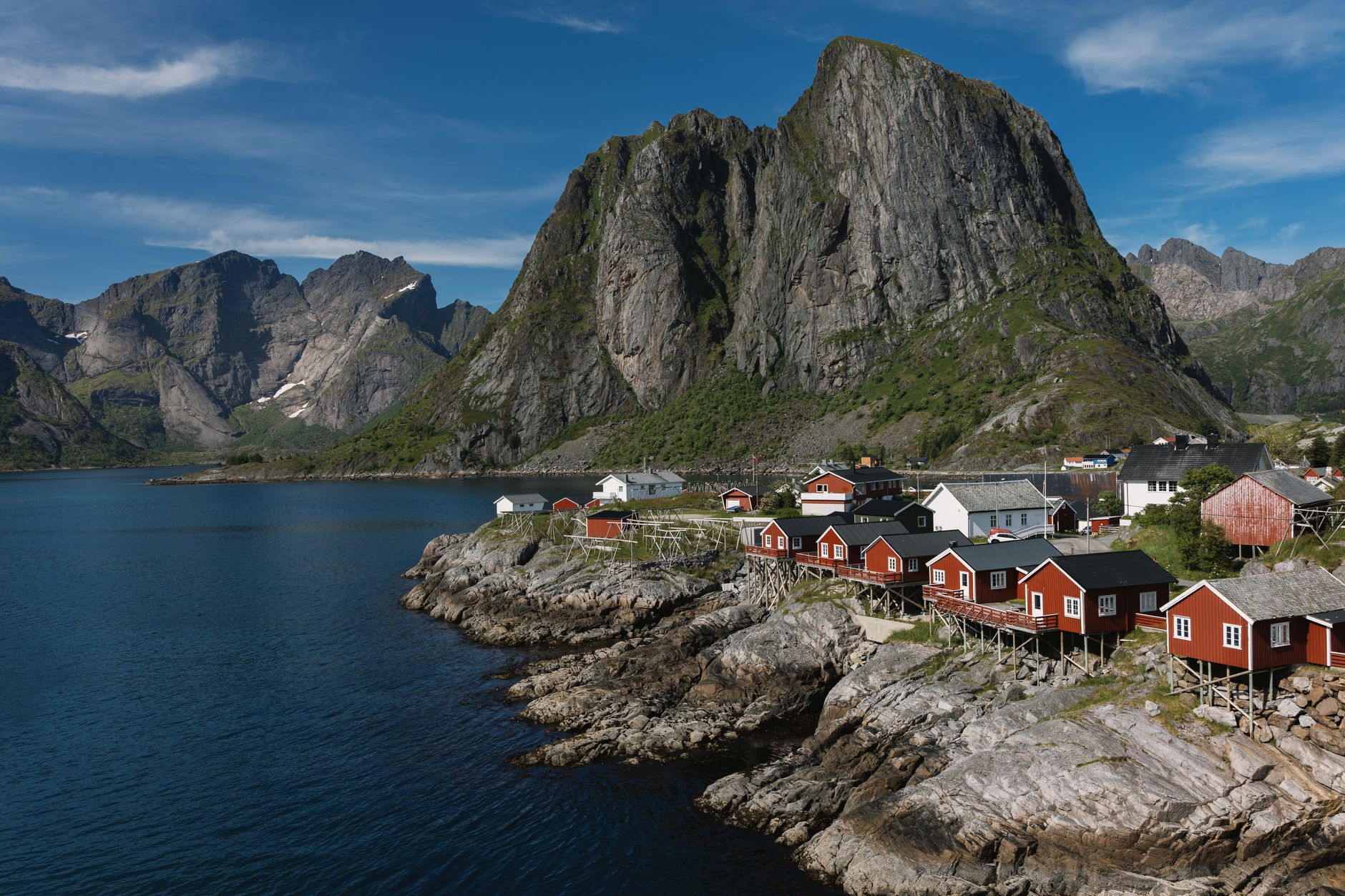
Above the Arctic Circle, daybreak does not arrive with a sudden burst of sunlight. It unfurls as an indigo watercolor wash over sheer granite peaks rising directly from the Norwegian Sea.
In the village of Reine, where red-painted fishermen’s rorbuer stand anchored to bedrock with iron stanchions, one is immediately struck by the absence of unnecessary sound. The prevailing acoustics belong exclusively to tide, herring gulls, and the faint rustle of dry birchwood in a cast-iron stove.
Form Follows Harsh Climate
Norwegian vernacular architecture has always been an exercise in absolute honesty. For centuries, builders did not have the luxury of ornamentation that could not survive gale-force Atlantic squalls. Timber was selected for resin density, joints were cut to tighten as humidity shifted, and roofs were weighed down with turf or slate.
"When you eliminate decorative noise, every square foot of an interior becomes deliberate. Light from a single window holds as much weight as a painting."
— Lars Halvorsen, Tromsø Institute of Vernacular Design
The Mind in Cold Latitudes
Travelers who make the journey north of the 68th parallel frequently report a curious phenomenon: their internal pacing slows dramatically within forty-eight hours. Without street advertisements, sirens, or continuous transit chatter, the brain recalibrates to slower biological rhythms.
We spent five days documenting the seasonal cod drying racks on the edges of Sakrisøy. The fishermen work with deliberate efficiency, speaking in sparse, measured cadences. Here, luxury is not an ostentatious concierge desk; it is five uninterrupted hours to finish a book while watching sea mist drift across Reinefjorden.